










Across enterprise systems, cybersecurity decisions now sit closer to revenue, continuity, plus operational survival than ever before. Risk exposure is calculated in minutes, not quarters, while leadership teams expect measurable outcomes instead of abstract technical assurances. Security teams respond under pressure.
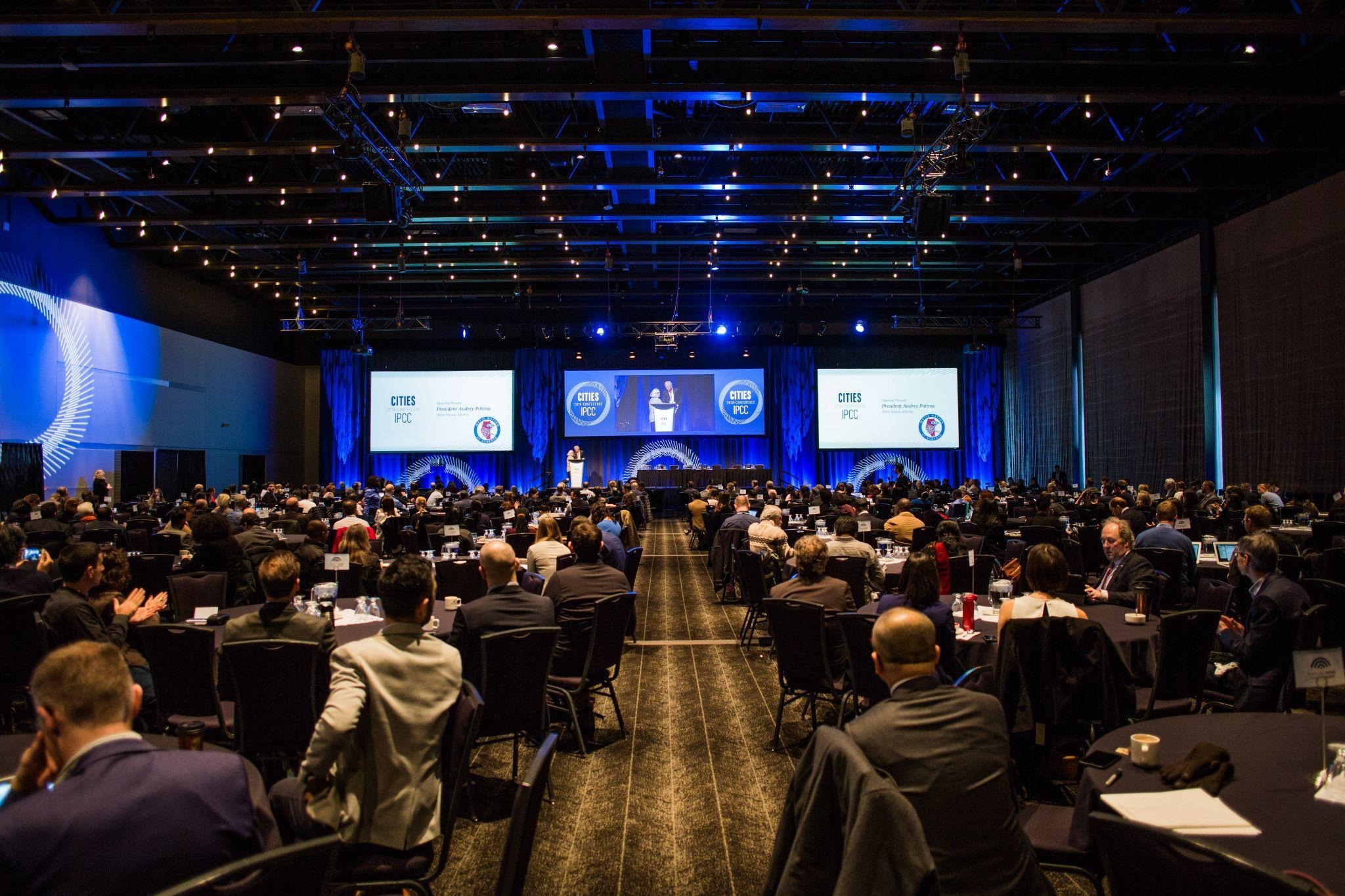
Within this environment, the cybersecurity innovation summit operates as a working ground where strategy meets execution. It is not built around passive listening. It is structured for decision-makers who need clarity, speed, plus direct applicability in how they approach digital defense.
The Growing Need for Strategic Cybersecurity Platforms
In interlinked infrastructures, vulnerabilities add up swiftly. One misconfiguration can propagate through cloud services, internal networks, and even third-party integrations, leaving it difficult to restrict once initiated.
Due to it, organizations need the environment in which solutions are tested. These forums unite the operational leaders, security architects, and even policy movers, who consider what works, what fails, and what requires immediate readjustment without wasting time.
Bridging Public and Private Sector Collaboration
Between national agencies and enterprise operators, the threat surface overlaps in critical ways. Infrastructure, finance, healthcare, plus digital services all rely on systems that attackers target without distinction.
Through structured interaction, these sectors engage in direct exchanges rather than layered communication. Policy discussions align with operational realities, while enforcement expectations are clarified alongside implementation constraints that enterprises actually face.
Innovation as the Core of Cyber Defense Evolution
Inside modern security frameworks, innovation is embedded into process, not just tooling. Detection models shift. Response timelines compress. Decision layers integrate automation alongside human oversight.
Artificial intelligence enters here with purpose. It supports anomaly detection, accelerates threat classification, plus reduces response latency across environments where manual intervention alone cannot scale. Yet adoption depends on context, and that context is shaped through exposure to applied scenarios presented within these summits.
Understanding the Role of Identity in Modern Security
At access points, identity determines system behavior. Every login, request, plus interaction becomes a decision node that either reinforces or weakens security posture.
Why does identity carry such weight now? Because distributed systems remove fixed boundaries. Users operate across devices, networks, alongside platforms, making static access control ineffective in managing dynamic risk exposure.
Zero Trust Architecture in Practice
Under Zero Trust, verification happens continuously. Each request is evaluated against multiple parameters, including device health, user behavior, plus contextual signals. Access exists only within defined conditions, and those conditions shift as risk levels change.
Multi-Factor Authentication Advancements
Authentication evolved quickly. Passwords no longer stand alone. Biometric inputs, hardware tokens, plus adaptive verification layers operate together to reduce dependency on static credentials while maintaining usability across enterprise systems.
Privileged Access Management Strategies
Within administrative layers, privileged access introduces concentrated risk. These accounts interact with sensitive systems, control infrastructure elements, plus influence operational continuity.
To manage this, organizations deploy controlled access environments where sessions are monitored, permissions restricted, alongside actions logged for accountability without slowing down workflows.
Identity Governance and Compliance
Across regulated sectors, access management must align with strict frameworks. Identity governance ensures that permissions match roles, remain current, plus are reviewed consistently without manual oversight gaps.
Automation drives this process. Audit trails, reporting systems, alongside policy enforcement tools operate together to maintain visibility across complex organizational structures.
Addressing Emerging Threat Landscapes
Threat patterns continue shifting. Attackers deploy coordinated methods, often targeting multiple layers simultaneously, exploiting timing gaps rather than isolated vulnerabilities. Defense requires precision.
Focus areas include:
- Detection systems integrated directly into operational pipelines instead of external monitoring layers
- Continuous visibility across hybrid infrastructures, including endpoints, cloud environments, plus third-party systems
- Response protocols designed for execution speed, not documentation cycles
- Intelligence-sharing mechanisms that extend beyond organizational boundaries, allowing faster adaptation
Each layer contributes to reduced exposure.
The Role of Education and Workforce Development
Across cybersecurity teams, skill requirements expand faster than hiring pipelines. Expertise must cover technical depth, strategic awareness, plus the ability to interpret evolving threat behavior in real time.
Training cannot remain static. Through structured sessions, hands-on workshops, alongside scenario-based discussions, professionals engage with challenges that reflect actual operational conditions rather than controlled simulations.
Technology Showcases and Solution Demonstrations
On the exhibition floor, solutions are tested through interaction. Vendors present capabilities, but evaluation happens through direct observation, where organizations assess how systems behave under realistic conditions, including integration complexity, scalability, plus operational impact.
This matters immediately. Decision-makers gain clarity on deployment feasibility, compatibility constraints, alongside performance expectations without relying solely on documentation or vendor claims.
Key benefits include:
- Direct access to solution architects who explain implementation nuances in real time
- Demonstrations that reveal system behavior under varying conditions instead of static presentations
- Comparative evaluation across competing tools with different architectural approaches
- Immediate understanding of deployment requirements, including integration dependencies
Each interaction reduces uncertainty before commitment.
Building Resilient Digital Ecosystems
Across enterprise planning, resilience functions as a measurable objective. It reflects how systems absorb disruption, recover quickly, plus maintain continuity under pressure without excessive downtime.
This requires integration at every level. Technology layers must align with policy frameworks, while human expertise operates alongside automated systems in coordinated workflows. Cybersecurity platforms provide the structure where these elements are examined together, not in isolation.
Final Thoughts
What defines a security strategy that holds under pressure when systems face continuous exposure, shifting threats, plus operational demands that do not pause? Within that question sits the relevance of PhilSec 2026 Summit, a platform built around direct engagement, applied knowledge, alongside decision-driven interaction. Positioned within a landscape where execution matters more than intent, it connects stakeholders who influence cybersecurity outcomes at scale. Through focused sessions, solution-driven discussions, plus a dedicated Identity and Access Management exhibition, PhilSec 2026 Summit offers an environment where strategies are shaped through action rather than assumption.